A History of
Union Mills Volunteer Fire Department, Inc.
On February 07, 1971, a group of citizens met at the Union Mills Community Clubhouse to discuss the possibility of organizing a Volunteer Fire Department. The meeting was a result of a similar meeting in the Hudlow-Mt. Vernon area. Since a station located in that area would not help the residents of Union Mills, the plan was to organize here. After a lengthy discussion by some thirty-one local citizens, the plan was in motion. The motion to organize was made by Pete Flack, second by Leroy Young; the vote was thirty in favor, one not voting. As with any organization, a Board of Directors was chosen to seek a Charter and the necessary information needed to continue the operation. The temporary Board of Directors, [who would also serve as our incorporators] elected by majority vote were V.T. Cooper, Chairman, along with John Briscoe and Leroy Young. On February 22, 1971, the Secretary of State granted a Charter to the organization to be known as the Union Mills Volunteer Fire Department, Inc. The organization was to operate as a non-profit, tax exempt Corporation. After meeting with members from several other fire departments, a set of by-laws were composed, an eight member Board of Directors, a Fire Chief and five line officers were elected.
Under the direction of Chairman V. T. Cooper and Chief Leon StClair, a fund raising program, a search for the permanent headquarters, purchase of fire apparatus, and a training program were under way.
During the next few months, ham suppers, auction sales, hot dog sales, music shows and just plain door pounding became a regular routine. A Fire Department Ladies Auxiliary was formed to help with the planning of meals and other fund drives.
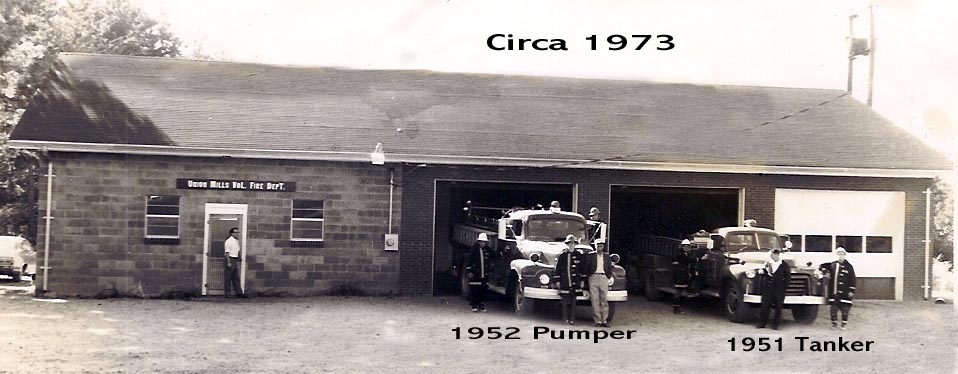
A temporary headquarters was established in the old ESSO building at the crossing of Hudlow Road and Old Highway 221 [now Coney Island Rd.] The building was equipped with running water and a kitchen, painted and equipped with a sign designating it as the Union Mills "Voluntary" Fire Department. After land was offered by Guy Thompson and by the R. C. Flack family, the present location was chosen because of its accessibility and location in general. This property would soon see a temporary structure to house the fire truck through the winter, and later the permanent Firehouse and Corporate Headquarters. Under the direction of Building Committee Chairman Arthur E. Briscoe, a year long building program was begun.In May of that year the first fire truck was purchased and served for the next five years. A tanker truck was also purchased to carry the necessary water supply required by the N. C. Department of Insurance. Each of these vehicles was twenty years old when purchased.
In the summer of l972, with the determination of local citizens
and a loan of $12000 dollars, A. E. Briscoe made his building
project become a reality. The moving of equipment began
in September of 1972 while work continued on the building.
The new Firehouse was a three bay garage
with attached kitchen and meeting hall.The masonry work was
done by vocational education students under the direction
of Max Robinson, with the balance of construction completed
by local citizens.Hot dogs and hamburgers were sold on
Saturdays to raise funds to support the work of the
organization.Other fund raising efforts were poor man
suppers, spaghetti suppers, and the annual Ladies Auxiliary
bazaar and bake sale.
December of that year brought about the election of new officers. With the new headquarters complete and the equipment in place, a new challenge lay ahead. Newly elected Chairman A. E. Briscoe and Chief Dean Conner began the process of getting Union Mills Volunteer Fire Department rated and certified by the N. C. Department of Insurance. In May of 1974, this goal was achieved and the 9-9A rating was awarded. This rating meant that the residents within a 4 mile driving range of the Firehouse would be given and average of 15% reduction on their fire and lightening insurance premium. This rating also meant that the Rating Bureau would require us to maintain serviceable fire apparatus; a 24 hour manned alarm station; and a crew of no less than nineteen firemen participating in at least 36 hours of meetings, training and drills each year.
In the fall of 1976, a decision was made to replace the used pumper truck with a new unit in order to maintain our rating. The new truck would be a 1976 Ford chassis with and all aluminum pumper body and tank. Purchase price of the new unit was $42000, financed by a Farmers Home Administration Community Service loan. Emergency One Equipment Co. of Ocala, Florida supplied this unit, the first of its kind in western North Carolina. Two other used tanker trucks would be purchased before a new chassis was acquired in 1991.
In 1978, a surplus Army truck was equipped with an old kerosene tank and a portable pump for use in fighting brush and grass fires. This unit served us until 1993, then replaced with another used vehicle. A used 1974 Chassis equipped with tank and pump was purchased from Valley Hills Fire Department. This vehicle was eighteen years old at the time of purchase, but was in good operating condition. In 1998, the tank and pump were replaced with a lighter, more efficient unit and the chassis kept in service.
As the firefighters and auxiliary became weary from the endless task of raising funds to operate; a decision was made to apply for a taxing district. Signatures wire gathered to petition the Board of County Commissioners to call for a special vote of the area property holders to tax themselves to provide funds for fire protection. Two attempts were made before this vote was successful in 1989. With the tax revenue as a regular income, a Board of Directors led by President Steve Greene make plans for future growth. The taxing rate began at eight cents per one hundred dollars of property evaluation. The current rate is set at five cents.
A fund was started for the future purchase of a tanker truck. In l991 mechanical failure of the aging and ailing tanker truck forced an early decision about replacement. Money was available to purchase a new truck chassis but not a complete operating unit. A chassis was purchased and the older tanker body mounted on it. This move could be done without borrowed money. This truck still serves as tanker truck in 2011.
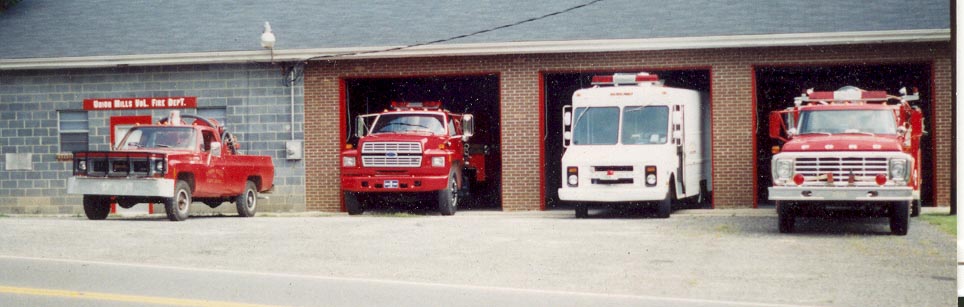
Plans began in 1996 to replace the twenty-year-old pumper truck. The 1976 truck would be used as a reserve unit that would not require all the equipment needed on a primary response pumper. During this same year, a building project began. As the meeting room of the current building was often used for community and family functions, a dedicated meeting and training area was need for the firefighters. In addition, a factor was garage space. A pumper, a tanker, a brush truck, and an equipment van were already cramped in the three bay garage. Initial plans were to add to the existing building, but space to expand and entry to the building were problems with this plan. After securing cost estimates, a new building seemed to be the answer. The former tennis court property, adjoining the fire department property was purchased from the 4-H Club and a building project began. An office area, meeting area, and three additional garage bays were erected on this property adjoining our original location. The entire interior portion of the all-steel outer structure was completed by the labor of four volunteer firefighters. Countless hours were given by Dean Conner, Eugene Conner, Gary Conner and Steve Greene in order to cut overall building cost. The assessed value of this structure is one hundred twenty five thousand dollars; actual construction cost was eighty one thousand dollars, and was completed without borrowed money.
As the building was nearing completion in 1997, a new pumper truck was purchased. This unit was a sales demonstrator, which allowed for cost savings of approximately fifteen thousand dollars. A thirty five thousand dollars down payment created a ninety eight thousand dollars lease purchase arrangement with the dealer. At this point, the organizations assessed value was two hundred forty thousand dollars and our debt service was only ninety eight thousand dollars. The personnel of this organization feel a sense of pride in our accomplishments and our wise use of public funds.
December 2003, Steve Greene ended more than 10 years service as Chairman of the Board of Directors. Much has been accomplished during that service. Steve had a serious dedication to this position and his efforts are evidenced by the changes during those years. Steve remains active as a Director and Department Officer, but chose not to accept another term as Chairman. Eugene Conner was chosen to replace Steve as President of the Board.
January 2004 brought to close 33 years of activity by the Ladies Auxiliary. We as a community owe a great debt to the many women who have served us through the Auxiliary. During the life of the group, dedicated ladies carried out fund raising activities which included meals, craft and bake sales, raffles, making and selling quilts, raking leaves and doing house cleaning. The long line of hard working women will long be remembered. WE THANK YOU!
In 2007 two additional apparatus were added to the fleet. A 2007 Smeal Pumper-Tanker became our first out apparatus for structure fires and auto accidents. A used 1999 Dodge equipped with a skid unit was added for brush fires.
Also during this time period a move began to extend our fire protection district to six miles. This is a process which has been undertaked by all the fire departments within the county. The process will likely take a year to achieve due to action required by the county Board of Commissioners and the NC State Rating Bureau. Another time factor involves a move to map all districts by property boundary rather than the normal cross country lines used by the state rating system. Our district did this mapping change when we formed our tax supported district ten years ago, but our insurance rating district continues to use the cross country system. Converting the insurance district to use property boundaries will require state legislative change.
Six Mile Extention and Service Districts
In April 2010 mapping of all fire districts by property boundary has been completed and approved by the state insurance rating bureau, and where possible six mile extentions have been completed. The process now is to convert the current fire taxing districts to service districts, this allows for more flexible change in the future. This conversion can be adopted by resolution by the Board of County Commisioners. This change was scheduled for approval during this 2012, however a problem occured with one district which will require legislative approval. The process was completed in 2013.
NC Department of Insurance Inspection
State inspections of fire departments are conducted each five years. Our department recieved a passing score on the inspection conducted October 14, 2010.
On February 21, 2010 fire deparrtment members held a dinner meeting to celebrate forty years of operation. Chief Dean Conner is the only founding member still active.
The department was issued its state charter on February 22, 1971.
March 2011 we sold our 1976 EOne Pumper to make room for the future purchase of a new pumper/tanker.
We made the final lease payment of the 2007 Pumper/Tanker and are currently debt free. Funds are available to purchase the new truck with a minimal amount of loan.
We purchased a used 2006 Ford F350 and added a skid unit from our 1999 Dodge Brush Truck. We moved the Skid Unit from the 1974 Brush Truck to the Dodge. The 1974 truck has been sold.
In 2014 we purchased a compressor and filling system for our self contained breathing apparatus. Prior to this we were depending on neighboring departments to fill our packs.
In 2014 we made a decision to begin equipping for vehicle extrication at accidents. We have acquired Hydraulic Power Unit, Cutter, Spreader, Rams, and Stabilizing Jacks. A training process is currently on going.
During 2017, 2018, 2019 we have used grant funds to assist with purchasing a Turn Out Gear washer and a dryer, 8 sets of new Turn Out Gear, 2 Self Contained Breathing Apparatus and spare cylinders, a Thermal Imaging Camera, and 4 Dual Band Portable Radios.
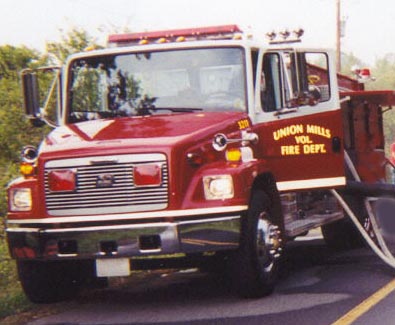
A new Pumper-Tanker was received in June 2018. Only 25% of the purchase cost was borrowed, the balance came from our reserve fund. This is a Four Guys build on a Freightliner Four wheel drive. The truck includes a built in generator and foam system. This truck has also been equipped with
five inch hose for supplying or receiving water. We received a $30,000.00 grant for equipping the truck.
This apparatus has been placed in service and responds to structure fires and motor vehicle accidents.
In the current year 2020 we are using $30,000.00 grant funds to assist with purchase of 2 Self Contained Breathing Apparatus with spare cylinders, 500 feet of large diameter hose, 8 Portable Radios.
Throughout the 49 years of operation, approximately 80 men and women have come and gone from the roster of volunteer firefighters.Chief Dean Conner is the only founding member still active in 2020. Hugh Nanney is the only other living founding member.